
Welcome to the
OPERA IN THE GARDEN Tranlsations Page
We’re excited to share music on the grass together!
PART I
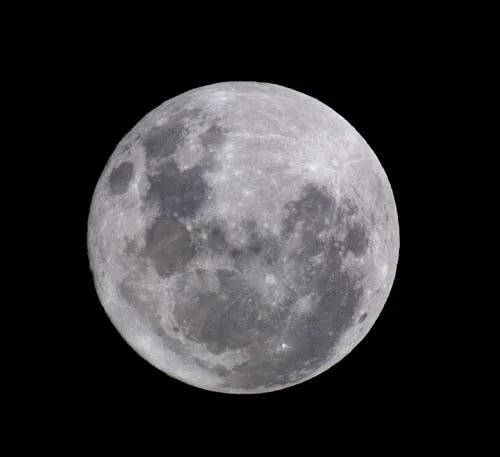
‘O Fortuna’ has its origins in the 13th century as a medieval Latin poem, which belonged to a collection known as the Carmina Burana.
It literally means ‘Oh Fate’, and it is a lament about the inescapable power of fate, a central theme to Roman and Greek mythology, in which fate is a force that rules both gods and mortals.
“O Fortune, like the moon you are changeable…
You crush the strong and the weak alike.
Fate is cruel and empty,
a whirling wheel
salvation is far away —
I submit to your power”
O Fortuna!
O Fortuna!
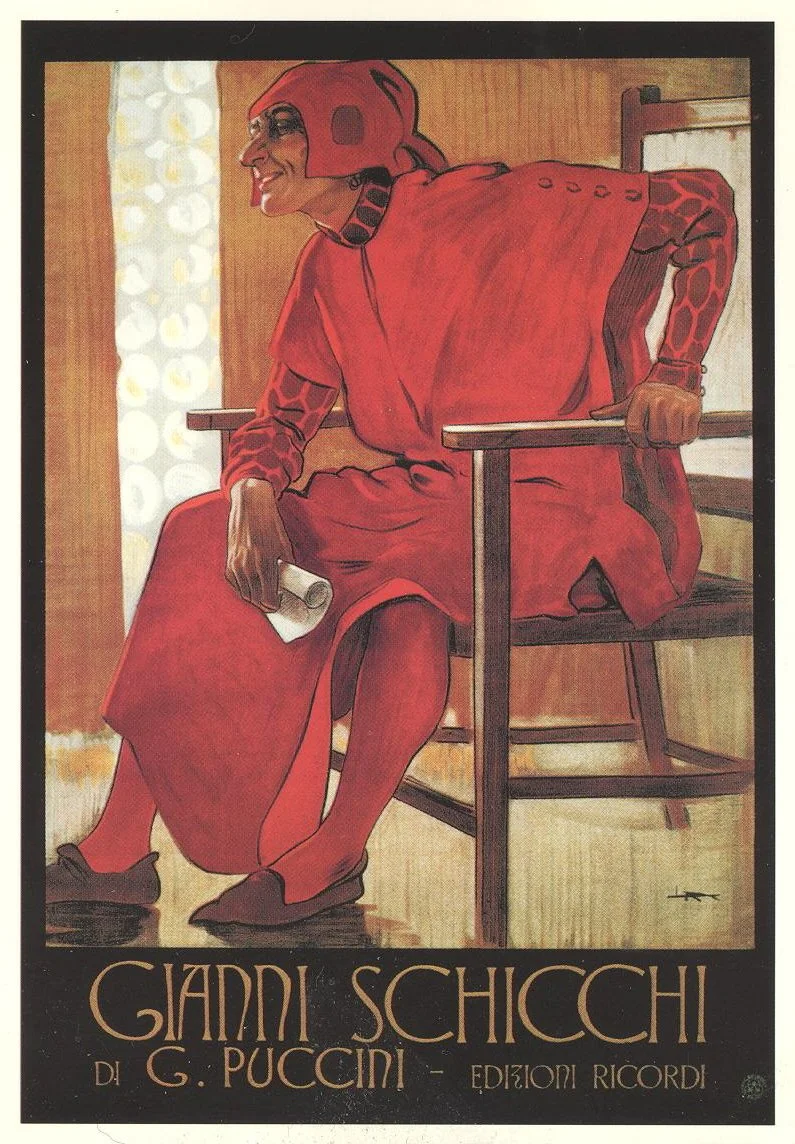
Era Uguale la Voce? From Gianni Schicchi by the one act Opera by Puccini.
Sung by Alfred Fonoti Fuimaono,
Was the voice the same?
Others; Exactly the same!
Ah! Victory! Victory!
Don't you understand? Oh, what blockheads!
Run to the notary: fast, out of breath:
"Mr. Notary, quick! Away to Buoso Donati's!
He's taken a turn for the worse! He wants to make his will!
Bring your parchments with you, quickly, sir, or it'll be too late!"
And the notary comes.
He enters: the room is half-dark,
inside the bed he glimpses the figure of Buoso!
The little cap on the head! The handkerchief on the face!
Between the cap and the handkerchief, a nose that looks like Buoso's...
and instead, it's mine!
Because in Buoso's place, there am I!
I, Schicchi, with a different voice and form!
I personify Buoso Donati,
dictating and giving the will its rules!
Oh people! This crazy whim that springs from my imagination
is such that it defies eternity!
Era Uguale la Voce?
Era Uguale la Voce?
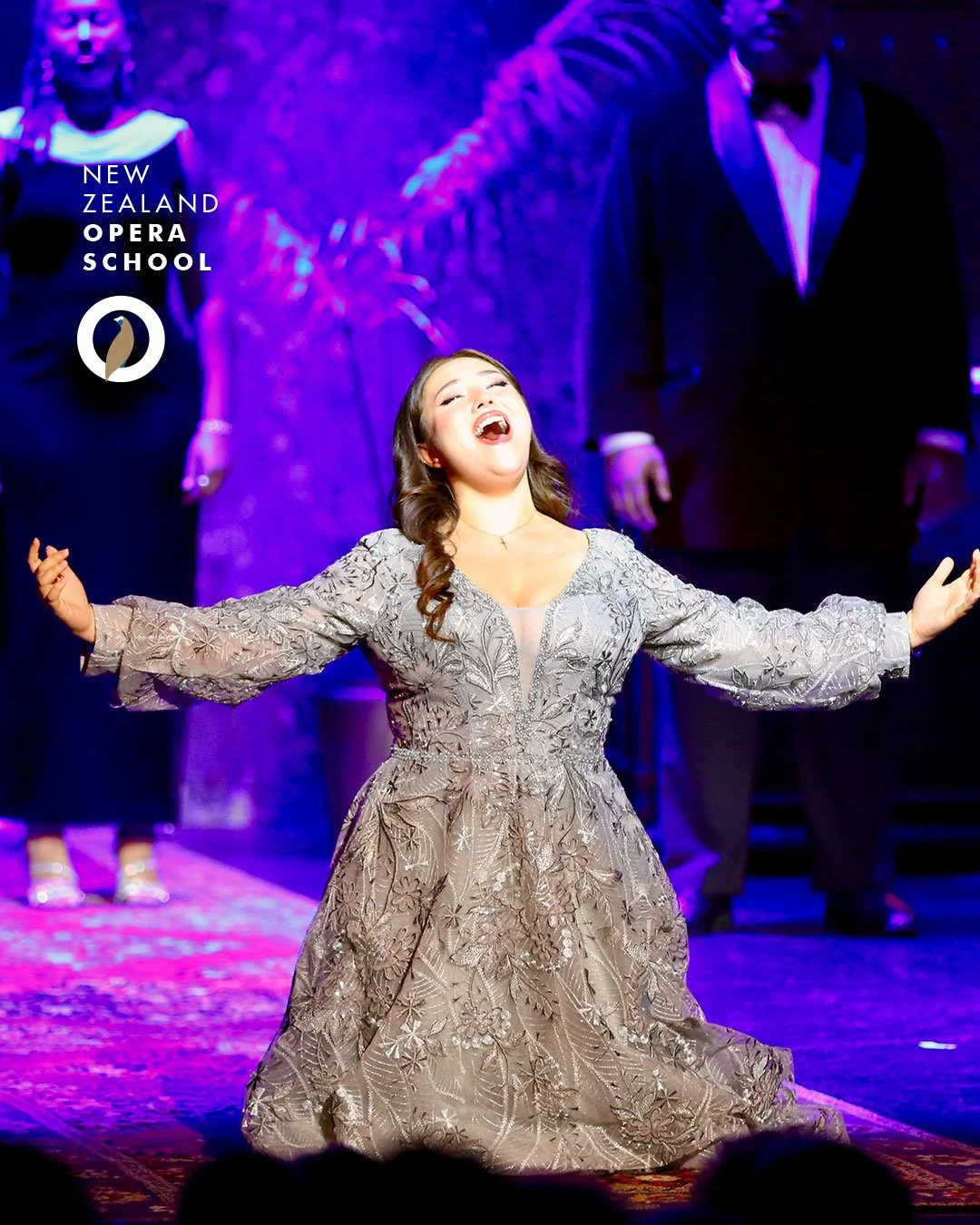
Sul fil d'un soffio etesio
From Falstaff, by Verdi.
Sung by Sarah Mileham
Falstaff was the last opera written by Verdi when he was 79 years old, and he was writing for only his pleasure, no commission, no performance in mind. When he finished it, he felt that it would be his last work and that his work was complete. The joy and beauty contained in just this aria are proof of that.
On the breath of a fragrant breeze,
Fly, nimble spirits;
Waken the ecstasy of the draught,
Let the flowers breathe vivid scents
And the air be sacred and pious.
Dance! And let the agile step
Leave no trace on the hay;
Dance! And let the ground be virgin
And the air be serene.
Wander, wander, wander!
Flowers of every color,
Form a circle together;
Let your arms move freely,
Your hands intertwined.
Go! Go! Go!
The fairies, the fairies, the fairies!
Sul fil d'un Soffio Etesio.
Sul fil d'un Soffio Etesio.
Rusalka's Song to the Moon by Antonin Dvorak.
Sung by Sarah Mileham
Mirroring Hans Christian Andersen’s The Little Mermaid, Rusalka is a powerful exploration of a woman who grows beyond her world to seek happiness; learning the true meaning of love, understanding and forgiveness.
Moon, high up in the deep sky,
Your light sees far away,
You wander around the wide world,
And gaze into people’s homes.
O Moon, stay a while,
Tell me, where is my beloved?
Tell him, silver moon,
That I am embracing him.
Tell him, at least for a moment,
That I am constantly thinking of him.
Light up his far-away place,
Tell him, ah, tell him who is waiting here!
If his human soul is dreaming of me,
May the memory awaken him!
O Moon, do not disappear, do not disappear!
Moon, do not disappear!
Rusalka.
Rusalka.
PART II
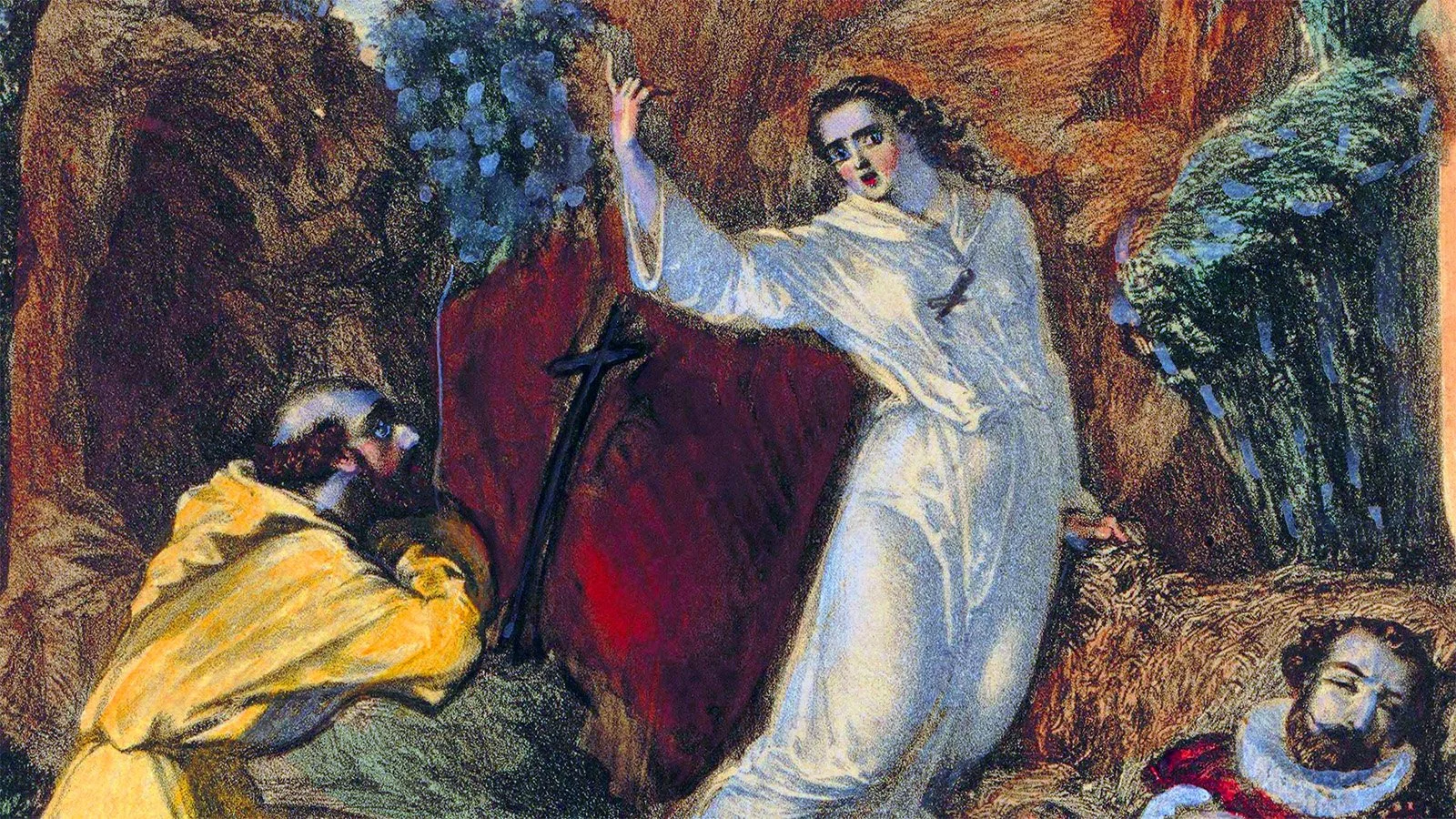
La Vergine d’egli Angeli from La Forza del Destino by Verdi.
Sung by Emma Couper with Chorus
The Virgin of the Angels
Covers me with her mantle,
And protects me vigilantly
Sacred angel of God.
The Virgin of the Angels
And/She protects me, protects me,
The angel of god
And/She protects me
The angel of god
protects me.
And protects me.
La Vergine d'egli Angeli.
La Vergine d'egli Angeli.
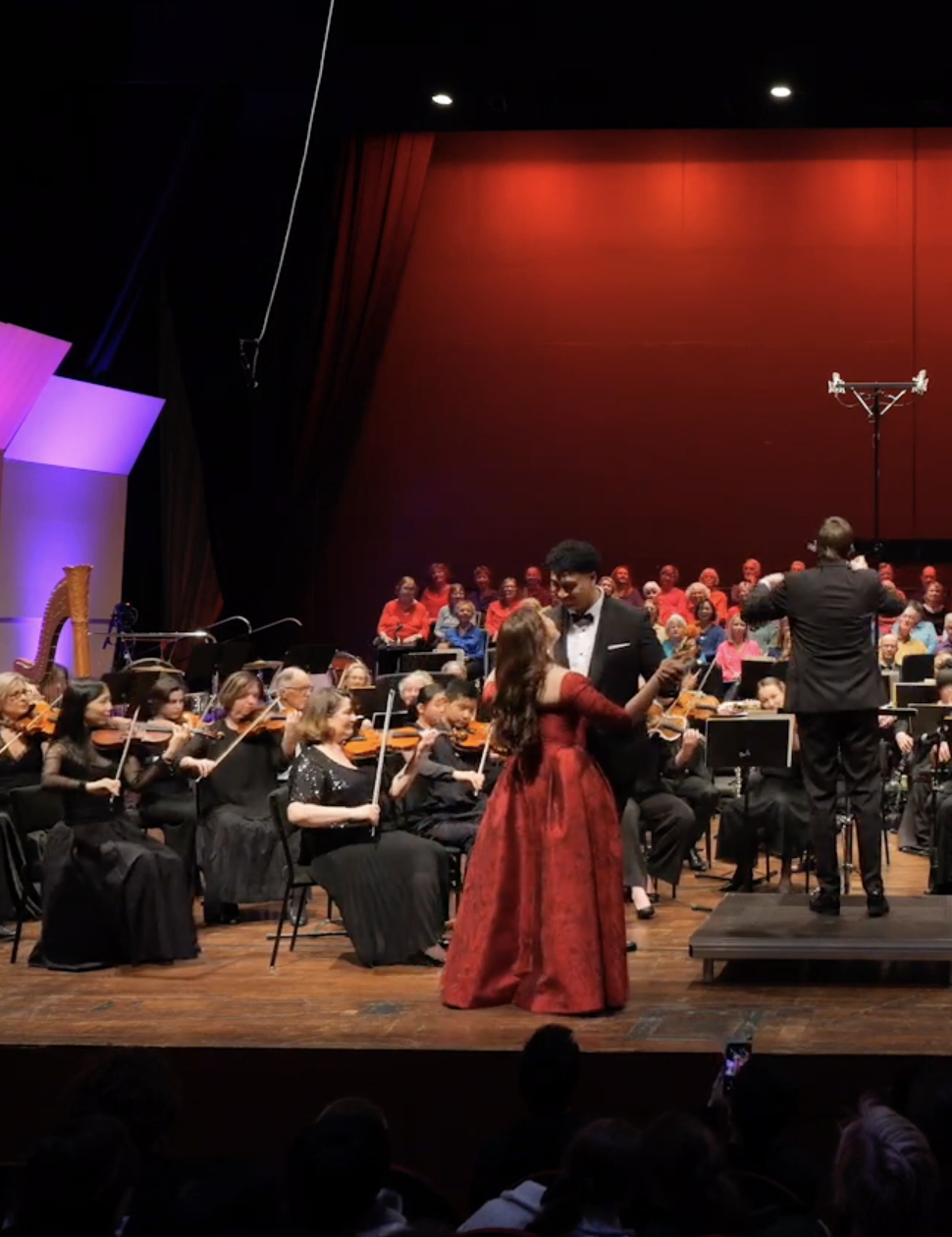
Lippen Schwigen from The Merry Widow by Franz Lehar
Sung by Sarah Mileham and Alfred Fonoti Fuimaono
The Merry Widow is one of the gems of Viennese operetta; its dazzling success made Franz Lehar heir to Johann Strauss II.
“Lips are Silent”
DANILO
Lips are silent,
Violins whisper
Love me!
All the steps say, please
love me!
Every squeeze of the hands
Has clearly described it to me
It says clearly, it's true, it's true
You love me!
HANNA
With every step of the waltz
The soul dances as well
Then the little heart jumps,
It beats and throbs:
Be mine! Be mine!
And the mouth doesn't speak a word
But it resounds on and on forever:
I love you so much
I love you!
HANNA-DANILO
Every squeeze of the hands
Has clearly described it to me...
It says clearly, it's true, it's true
You love me!
Lippen Schweigen.
Lippen Schweigen.
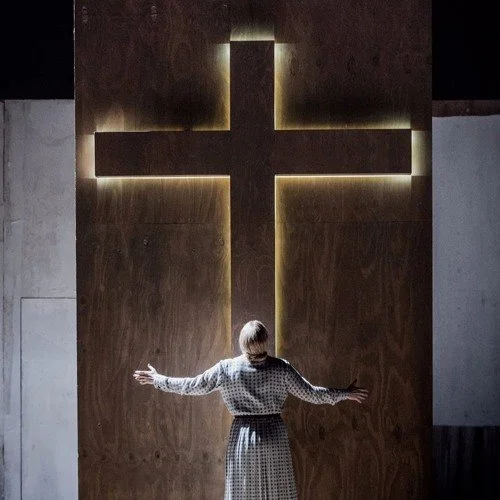
The Easter Hymn from Cavalleria Rusticana by Mascagni
Sung by Sarah Mileham and The Chorus
Cavalleria Rusticana has so much goodness packed in such a short time. Its first performance in 1890 was a huge success, with Mascagni taking forty curtain calls!
CHORUS
inside the church
Queen of heaven, rejoice!
Alleluia!
Because whom you were worthy to bear
Alleluia!
has arisen as He said,
has arisen as He said.
Alleluia!
OUTSIDE THE CHURCH
Exalt, the Lord is not dead!
He, bright shining, has opened the tomb!
Let us sing praise unto the arisen Lord,
today ascended to the glory of Heaven!
He, bright shining, has opened the tomb!
Let us sing praise unto the arisen Lord,
today ascended to the glory of Heaven
SANTUZZA
Let us sing praise unto the Lord, he is not dead!
Let us sing praise unto the arisen Lord,
today ascended to the glory,
to the glory of Heaven,
to the glory of Heaven!
LUCIA AND OUTSIDE CHORUS
to the glory of Heaven!
CHORUS
inside the church
Alleluja!
The Easter Hymn.
The Easter Hymn.
PART III
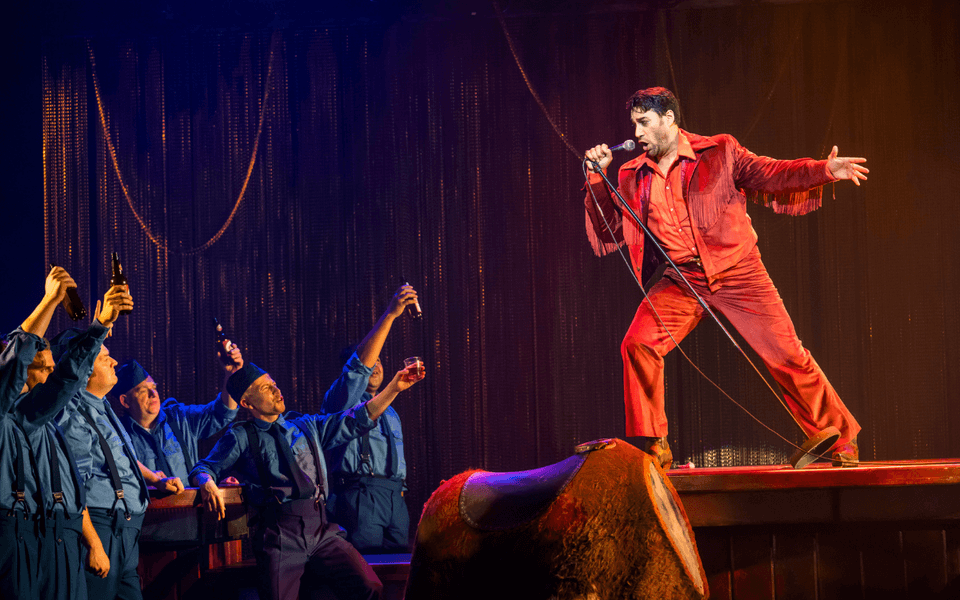
Toreador Song (Votre Toast!) from Carmen by Bizet.
Sung by Alfred Fonoti Fuimaono and Chorus
Bizet had no affection for the opera’s most famous aria: ”You asked for tasteless and that’s what you got.”
It's Spain and it's hot and Carmen, a beautiful woman and massive flirt, is leaving her job at the local cigarette factory. Escamillo - a flashy Toreador - woos her from her military boyfriend…
Toreador Song.
Toreador Song.
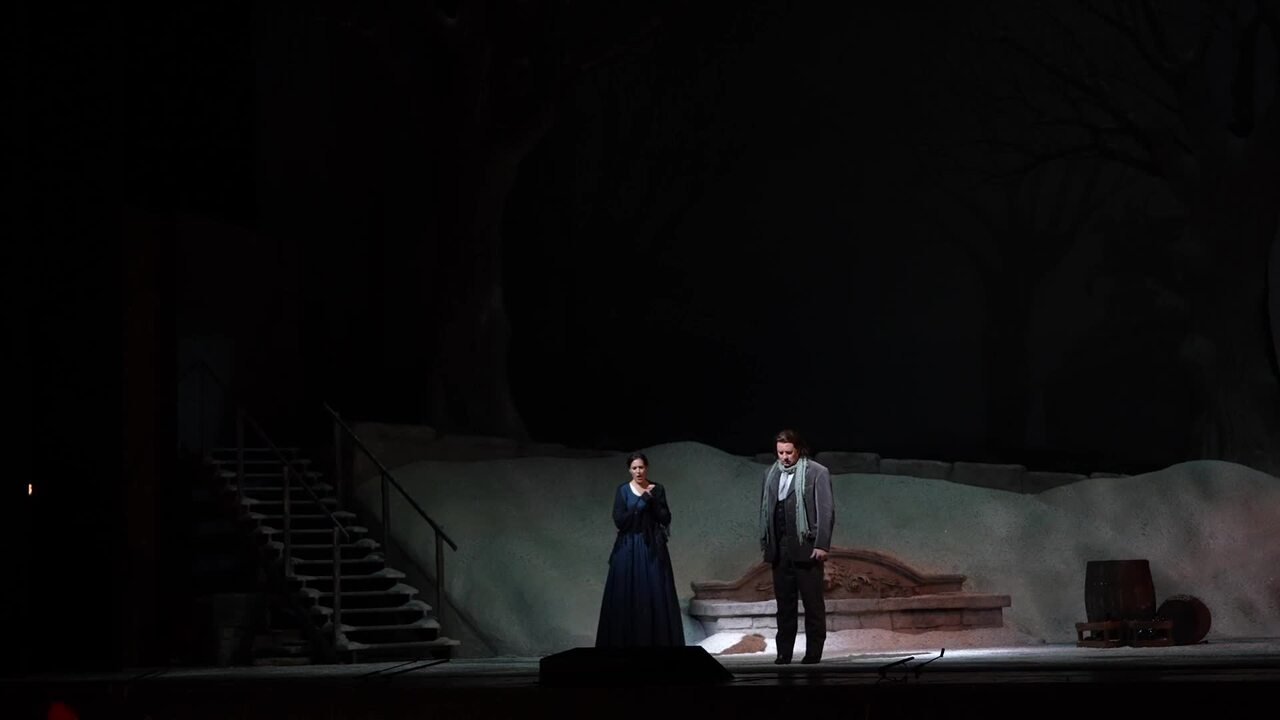
Donde Liesta Usci from Madame Butterfly by Puccini
Sung by Sarah Mileham
In Act 3 of "La Boheme," Mimi learns the true reason why Rodolfo has been acting very irritable towards her. Her persistent cough and his dire financial straits have convinced Rodolfo that she would be better off without him.
The two lovers agree that it would be best for them to separate once the warmer months of spring arrive. In this aria, Mimi bids Rodolfo a fond but tearful farewell.
Once happily leaving
to your cry of love,
Mimi returns only
to the solitary nest.
I return again
to make flowers and bouquets.
Goodbye, no hard feelings.
Listen, listen.
The few things I’ve accumulated
I’ve left behind.
In my drawer
is a small band of gold
and the prayer book.
Wrap them in an apron
and I will send the concierge…
Look, under the pillow
there is a pink bonnet.
If you want to keep it in memory of our love, you may.
Goodbye, no hard feelings.